

“Try to understand what you want from your life” – The Career Path of Ulrika Björkstén
Ulrika Björkstén, current secretary general of Public and Science Sweden, has had a rich career in science communication spanning several decades. However, her journey was quite unpredictable and full of professional risks. As she reflects on her path, we see how career development rarely follows a straight line.
The office of Public and Science Sweden (Vetenskap och Allmänhet, V&A) is located in a historic 19th-century building in Östermalm, right in the centre of Stockholm. Here, I meet with Ulrika Björkstén, the Secretary General of V&A, who leads the organization’s efforts to promote dialogue between researchers and the general public.
Ulrika holds a degree in engineering physics from Lund University and a PhD in physical chemistry from EPFL, a prestigious university in Lausanne, Switzerland. “I started studying physics because I believed that the natural sciences are very important for society, and having a societal impact was a priority for me,” she explains. “So, for me, it wasn’t obvious from the beginning that I would pursue the natural sciences. But this was the end of the 1980s, when climate change started to become an issue, and this was of great interest to me from a societal perspective. So, I chose to focus my PhD research on solar energy.”
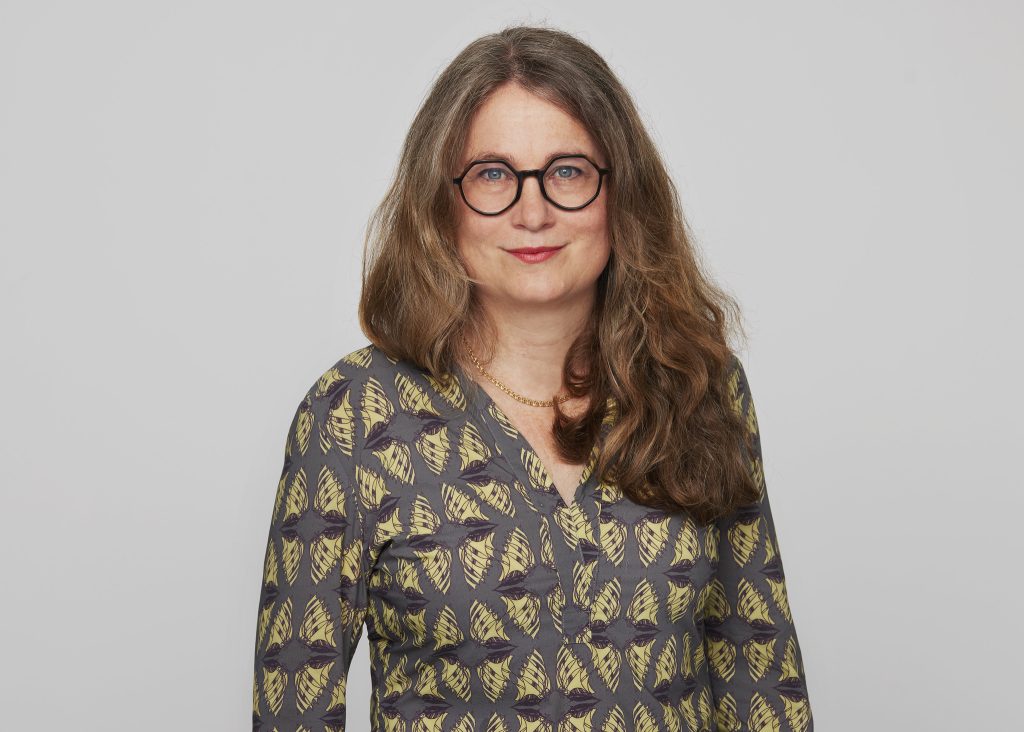
Although she found her PhD research interesting, she did not see herself in the lab for the rest of her life. After completing her PhD, she returned to Sweden and began working in science journalism. “I enjoyed writing and communicating in general, and I knew I was good at that. I told some newspapers that I am a science writer and simply started writing,” she says bluntly.
When I ask whether she had any experience with science writing beforehand, she laughs: “No, but they believed I had. Anyway, science writing is not necessarily a degree you just obtain – it is a skill that you develop.”
She became a freelance writer and wrote articles about science for a number of newspapers, including Svenska Dagbladet and Dagens Nyheter. “Many of my former classmates thought I was crazy,” Ulrika laughs. “I even got a phone call from a university professor who wanted to offer me a postdoc position – he told me: ‘You shouldn’t be doing this with your kind of training!’ However, most of my friends were very supportive.”
After freelancing for several years, Ulrika was offered a position as Science Editor at Svenska Dagbladet. She eventually resigned from this role and went on to work at the Nobel Museum. Not long after, she joined Swedish Television (SVT) as a Science Editor, although only on a temporary contract. “Looking back at my career, I realize I wasn’t afraid to take professional risks,” Ulrika reflects. “I left a permanent position at Svenska Dagbladet, and later another at the Nobel Museum. Whenever I felt I was no longer developing, I chose to move on.”
After her contract with SVT ended, Ulrika returned to freelancing and started working part-time for Swedish Radio. Eventually, she became the head of the Science Department at the Swedish Radio, a role she held for the next 15 years. “As you understand by now, that is a really long time for me to stay in one place,” she jokes. “I was really happy on the radio, but I grew more interested in fostering two-way communication between science and different stakeholders. When this job at V&A appeared, I applied for it.”
To everyone interested in working in science communication, Ulrika recommends obtaining a PhD. “To do this job, it is important to truly understand science, and that understanding comes through PhD training. You become a more independent thinker, learn how to ask the right questions, and develop the ability to synthesize information from various sources.”
Lastly, she emphasizes the importance of understanding what science communication really means. “It is not about telling everybody how great science is – it is about understanding the role of science in society. A science communicator is someone who has the tools to understand science and uses them to facilitate dialogue between science and the rest of society.”
Public and Science Sweden is one of the collaborators of the KI Internship Program and has received multiple interns from KI. For more information about their work and internship experiences, visit:
Public & Science Sweden – Vetenskap & Allmänhet
Our guest blog – Vetenskap & Allmänhet

0 comments