
From Bench to Builder
Paulo Czarnewski on Launching Precisium AI
Written by Ali Okhovat, PhD student at Karolinska Institutet and participant of the course “Career Skills for Scientists” during the autumn term 2025.
A wet-lab immunologist turned data scientist, Paulo Czarnewski is building atlas-scale disease models (and a company) to make clean, harmonized data the shortest path to discovery.
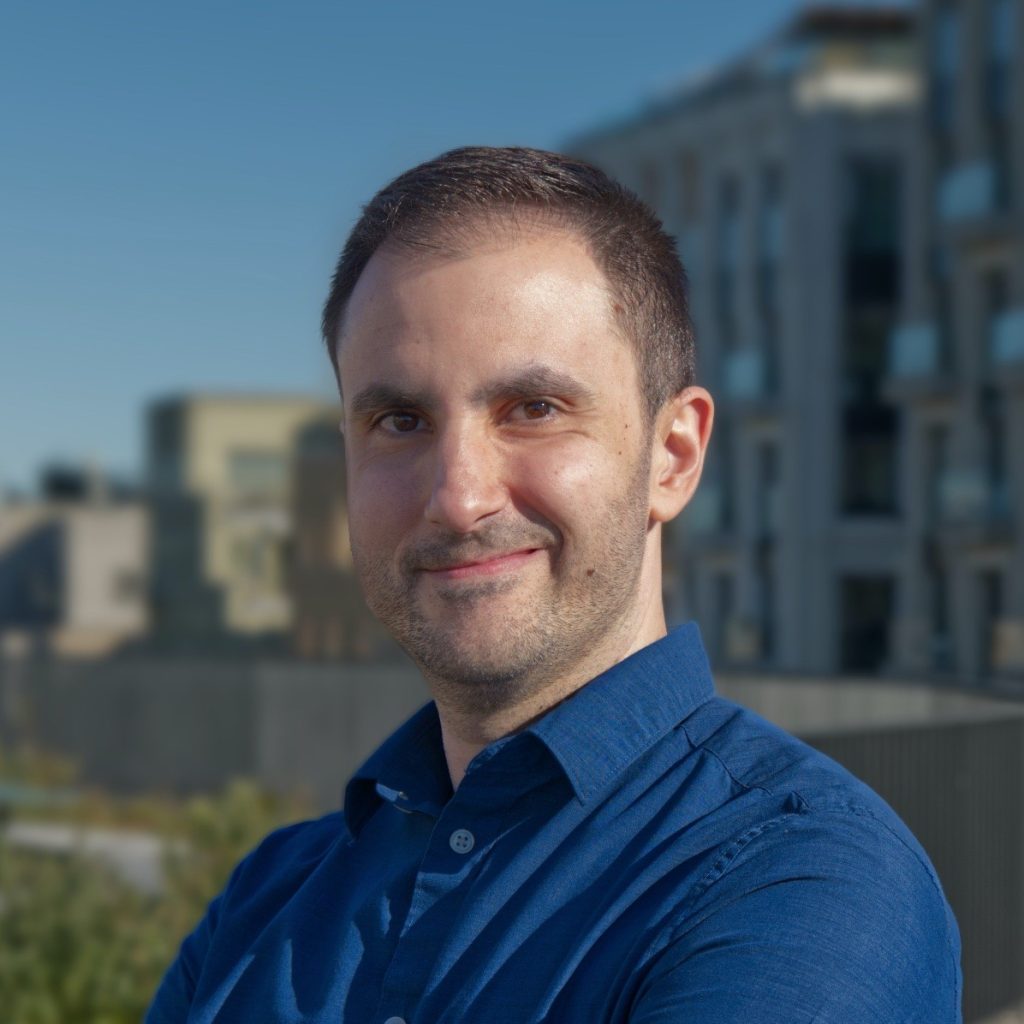
On any given week, Paulo Czarnewski toggles between code reviews, contracts, and customer calls, typical for a scientist-CEO chasing precision medicine at scale. Trained in immunology and parasitology, he pivoted to single-cell and spatial bioinformatics at KI and NBIS, where the pain of messy data sparked a new idea. That idea became Precisium AI.
In this Q&A, Paulo explains the jump from academia to startup life, the discipline of milestones and deliverables, and why “clean data” is the real accelerator for precision medicine. Readers considering a similar path will find pragmatic advice on skills that transfer, and how to learn the ones that don’t.
For readers meeting you for the first time: who are you, and what path brought you to Precisium AI?
I’m originally from Brazil and did my PhD in immunology and parasitology. After moving to Karolinska Institutet, I worked in Eduardo J Villablanca’s lab and specialized in bioinformatics, single-cell and spatial omics. At the national bioinformatics infrastructure Sweden (NBIS), I coordinated efforts for the Human Developmental Cell Atlas: cataloging, harmonizing, and building large-scale data infrastructure. That work, plus my interest in precision medicine, led to the idea behind Precisium AI, combining advanced bioinformatics with large-scale omics to deliver precision insights.
What does your role as CEO actually involve day to day?
A lot of hats: business management, finance, sales, and product decisions. I still lead parts of product development because many of our large-scale infrastructure steps rely on algorithms I’ve built. Even when I’m not coding, I’m planning: specifying tasks clearly, defining what the end product should look like, and sequencing deliverables so we ship in weeks, not months.
You moved from the bench into code, and now to a startup. What were the hardest transitions?
I like learning outside my comfort zone. During my PhD I took a programming course just to run a PC analysis for a qPCR experiment, then learned Python, R, and got deeper into genomics and transcriptomics. In bioinformatics I picked up HPC administration, working on highly-secure environments, efficient algorithmic parallelization, and large-scale data harmonization. The company wasn’t a single “aha” moment. It was a combination of skills accumulated over years, including methods I hadn’t published. I’m still driven by science, and Precisium AI is very much a science-focused company, we deliver research-grade work for customers and build what we love.
Founders often say the “business side” is a second PhD. How did you handle finance, taxes, and legal?
There’s a learning curve. But there is no better teacher than learning by doing. From reading the tax authority’s documentation and legal guidelines, and working with external consultants. But you still need enough in-house understanding to review their work. If you want a truly independent company, you can’t outsource judgment.
Why start your own company instead of staying in industry?
Industry experience was valuable, but some of my ideas were not suitable to be developed there. My list of 5-year-old ideas for large-scale atlasing was growing fast and it was time to combine them at Precisium AI. Another big difference is mindset: industry is goals, milestones, and deliverables. Even exploratory work ends with a short report of what we tried, the plots, whether datasets can be integrated, so the loop is closed and the effort is traceable.
Paint us a “typical week.”
I batch meetings into two heavy days. When I’m at KI, I stack face-to-face meetings with collaborators and clients. Mondays often include back-to-back digital meetings, sometimes across U.S. and Brazil time zones. Other days are “operation time”: coding, product development, and planning milestones with clear deliverables for the team. Then there’s the rest of startup life: finances, HR, payroll, contracts. Early on, everyone must wear multiple hats.
Which research skills carry over most?
Scientific writing and structured communication. Keep emails short and lead with the conclusion; put details in an attachment, the “supplementary material”. In reports, we emphasize results first so people can act quickly. I also carry over planning and execution habits: defining milestones and deliverables, and assembling publication-style figures with legends for each experiment to keep work traceable.
Advice for a wet-lab PhD who enjoys coding and is eyeing industry, or entrepreneurship one day?
You likely have more relevant skills than you realize: organization, planning, presenting. Reframe them in industry terms. Consider time inside a company to learn workflows, quality expectations, and why companies exist (innovation plus execution). If you’re headed toward leadership, get exposure to budgets, contracts, and product decisions.
What’s the five- to ten-year vision for Precisium AI?
Two big goals. First, build realistic, multi-scale disease models that use the huge amount of public data out there, models that consider the whole body, not just a single tissue. Second, be the leading platform for clean, harmonized datasets so researchers spend time on discovery rather than data cleaning. Personally, I’d love to see at least one disease meaningfully impacted, where our models help reveal mechanisms or guide a therapy. In five years, we expect more models and a mature clean-data platform. Clinical trials will come through partnerships with biotech and pharma, alongside the regulatory work that requires.
About the interviewee
Paulo Czarnewski is the Founder & CEO of Precisium AI, a Stockholm-based company building whole-body, atlas-level disease models and a platform for clean, harmonized multi-omics data. He previously worked with NBIS/SciLifeLab and the Human Developmental Cell Atlas in Sweden, and has held senior computational roles in industry. His career spans immunology/parasitology training in Brazil and a later pivot to single-cell and spatial bioinformatics, advanced data curation, and HPC-scale analytics.

0 comments