

MSCA Postdoctoral Fellowship Tips: Lessons Learned from Successful Applicants
The MSCA Postdoctoral Fellowship application is approaching again. Last year, I shared five strategies to prepare your MSCA application. Since then, I’ve talked to other MSCA fellows to gather diverse perspectives. So, in this post, I bring together their insights and lessons learned. Maybe there is something for you in the mix – cherry picking is allowed and even recommended!
Feedback Strategies for a Strong MSCA Postdoctoral Fellowship Application
Over and over again, I hear from senior researchers about the importance of seeking diverse feedback when writing a grant application. This is crucial, especially since reviewers will almost certainly come from varied backgrounds and have different levels of familiarity with your work. Your proposal needs to be sufficiently technical, yet clear enough for a generalist to follow, all while keeping jargon at bay. Not an easy balance to strike. Here is where key feedback comes in.
Fellow 1: “Be selective. I would go: Supervisor, senior colleague, outside field, Grants Office.”
Fellow 2: “I would try to get feedback from more people… I only asked my supervisors and the grants office.”
The Takeaway: There is no perfect formula. Most of us will always wish we had done something slightly differently. And realistically, there is probably always something we can improve on, no matter how strong your proposal is.
How to Plan Your MSCA Proposal: Gantt Chart and Timeline Tip
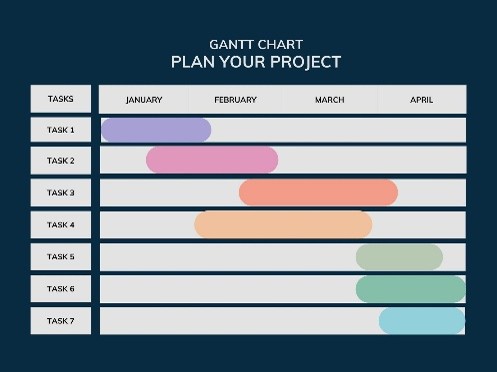
Beyond feedback strategies, several fellows also reflected on the practical aspects of organising their proposals. Mattia Zaghi (MSCA Fellow, KI), when asked what he would have done differently, mentioned doing the Gantt chart among the first things. In Mattia’s words: “It is important but also useful to lay out a plan.”
And this might be confirmation bias at its finest, but I do think that is great advice! It helped me tremendously.
Practical Writing Tips for the MSCA Excellence and Implementation Sections
Till Brückner (MSCA Fellow, KI) gave some great actionable advice:
- “Start with one clear sentence setting out the overall aim of the project. Everything else flows from that sentence”.
- “Be clear why your project is important to science or the real world. If you cannot clearly explain why and how your project will change the world, why should taxpayers pay for it?”
- “The Excellence section wins the proposal; the other sections lose it. Most people lose points in the boring Implementation section”.
- “Leave formatting until last. Squeezing text around pictures, bold and italic fonts, and compression of references should only be done the day before you submit. Far more efficient”.
For additional institutional guidance, you can also check the KI MSCA support resources.
What the MSCA Application Process Teaches You for Future EU Grants
Two fellows shared reflections on the evaluation process and on what parts of the MSCA application turned out to be most valuable for future grant writing:
- “The randomness of the grading. Your proposal might be top-notch, but reviewers’ role, especially in high-demand fellowships, is to find small details which subtract points, which will end up having 92%, not 94%. Not getting the fellowship does not necessarily mean a bad proposal… it might mean that, despite claiming fairness, the reviewer was not feeling great this day and cut half a point here or there”
- “All of it. Since it is a very structured grant, it is a very good training for the future for anyone who wants to enter the grant writing game, especially when applying for EU funding.”
Final reflections
Overall, another important comment was: “chill and enjoy your science.” It’s advice we all give our younger selves and still struggle to follow. Enjoy the journey. Keep sight of what matters to you. I’m pretty sure once I’m 80, I will not care about how many grants I got, but the people we have had around us, the contributions we made to the world.
Someone mentioned I should have given more concrete MSCA Impact section tips (which is 20% of the score). While I agree the Impact section is crucial, my goal wasn’t to write a technical bootcamp manual. There is already plenty of institutional documentation for that. What I felt was lacking in the academic space was a guide on how to mentally navigate the process. Having a strategic plan changed the game for me, and that generalizable approach is what I wanted to share.
Call to action
That said, please let me know in the comments below if you’d like to see a more specific post and how it could help you! I don’t shy away from constructive criticism. And I think that is also a great way to go about grants. It is not personal. If the criticism is constructive, welcome it. If there are simply critiques, you can’t do anything with them really, so…noise, I guess.
Have you written (or are you writing) an MSCA Postdoctoral Fellowship application? I’d genuinely love to hear your experience. What surprised you? What do you wish you had known earlier?
And if there are specific aspects, like how to approach the Impact section, how to structure Gantt charts, or how to manage the emotional side of grant writing, let me know in the comments. I’m happy to create a follow‑up post that digs deeper.
If you missed my earlier post with the overall strategy I used, you can find it here.
Finally, I’d like to leave you with these random words of wisdom I found:

Until we meet again,
Alana

0 comments