
Following curiosity: A journey through epidemiology and innovation
Written by Sara Licaj, PhD student at Karolinska Institutet and participant of the course “Career Skills for Scientists” during the spring term 2026.
Quick Facts
- Name: Taulant Muka
- Position: Chief Scientific Officer of Epistudia
- Year of PhD defense: 2016
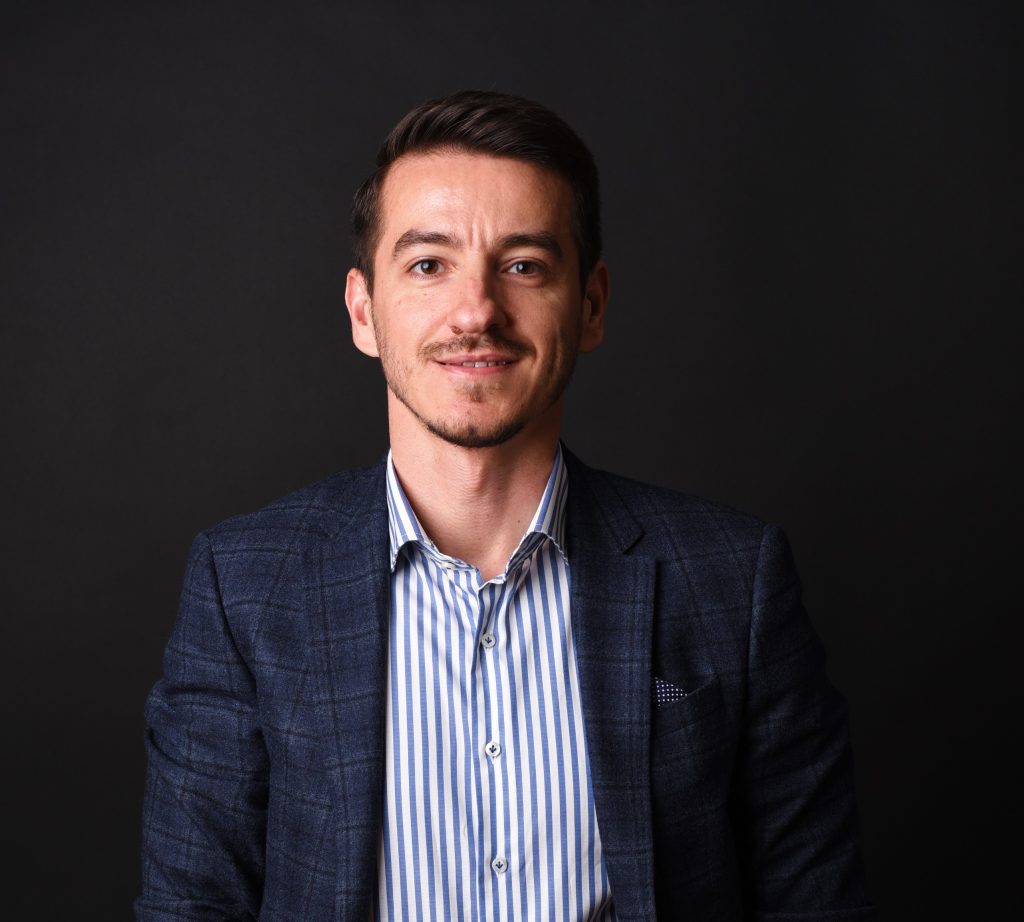
Dr. Taulant Muka is a medical doctor and epidemiologist whose career has spanned academia, pharmaceutical industry, and entrepreneurship. After completing his medical degree in Albania, he pursued a master’s degree in public health and a PhD at Erasmus Medical Center in Rotterdam. His research career has taken him across leading institutions including Cambridge, Harvard, the University of Bern, and Stanford University. He is ranked among top 1% most influential scientists globally according to Stanford/ Elsevier ranking. Today, he combines his academic work with innovation as co-founder of Epistudia, a startup dedicated to making evidence-based medical education more accessible for healthcare and life science professionals.
Can you tell me a little bit about your interest in epidemiology and how you got into this field?
“I studied medicine in Albania and finished in 2012. Back then, we were not very well educated on statistics, I actually didn’t have any clue about what a p-value was. Keep in mind that at the time we had limited internet access, so it wasn’t like today, it was quite expensive even to go online. There were some EU scholarships in public health for the Western Balkans, and I really wanted to do something abroad. At that time, I also realized that maybe clinical medicine was not something I wanted to do. I started a master’s in public health in Rotterdam, and this was also my first real exposure to research and epidemiology. I was lucky during the master’s to work with Prof. Albert Hofman, who is one of the biggest names in epidemiology, it was very inspiring. The environment, the mentoring, the data we had, I think that was the main reason or the way how I became passionate about epidemiology. And of course, the more I learned, the more I realized epidemiology and scientific skills give you the tools, the skills, the mindset to focus deeply on things and not on their superficial aspects. A lot of things we learn in medicine are actually generated by epidemiologists. So, why not be among those who discover things rather than those who apply them?”
How was your PhD experience?
“Amazing! I think it has been the best years of my life. I was very lucky to be in the right department, in the right time, with the right people. I had a very supportive supervisor, Prof. Oscar H. Franco, who encouraged a lot of freedom to research and explore. As I mentioned, in Rotterdam, we had excellent data and you could explore lots of topics. The best of all was also the connection: you were not isolated, you could collaborate with many groups globally. When you follow a PhD path in Rotterdam, you have the first year to do research training. The master’s degree was mandatory, so you really get the research skills and not just jump into research without knowing how to do it. My PhD has shaped who I am today and what I have achieved so far. It was quite a productive setting, so we didn’t have these boundaries of nowadays where you need to apply for a research proposal and go through all the bureaucracy; as soon as you had a very good idea, you could share it with your supervisor and other PIs. If they liked the idea and found it feasible and would add new value, you could immediately get access to the data, explore them and even work with other teams to replicate in case there was an interesting finding. Of course, this approach has also some disadvantages, but it shapes evidence-based curiosity which is very important to a scientific development.
There was freedom to explore and there was interaction with other people. I’ve seen research universities where sometimes students work very isolated, but we were working very much together and that kind of gives a completely different motivation than when you are just doing things on your own. I also had the opportunity to go abroad, as my supervisor had contacts with the groups I visited in Cambridge and Harvard. I saw these internships as a way to learn about different cultures, I wanted to see how others work and what I could improve in the setting I was in. I also had good opportunities to work with other data as well, but I think that what I value the most is seeing how different working cultures were. This gives you a different view and it can help you value even more what you are currently doing.”
What were your thoughts about your future career at the time of your PhD?
“Sincerely, when I entered my PhD, I was not thinking at all about what my future would be. I don’t come from a family with an academic background, so I had no clue what an academic path was about. I just enjoyed the time of working on what I loved by doing research, publishing, going to conferences, so I was just enjoying the moment, and I think that was the reason why I was productive. I didn’t really focus on the metrics; sometimes I see many students caring a lot about this when publishing, because they want to go for a postdoc or become a professor. I just focused on exploring and doing research, and I didn’t care at all where I was publishing. Probably this is why I enjoyed it. But later on, of course, I was like, what should I do now? Should I focus on research? I did one year of postdoc and then I realized that I needed a change, and I was very curious about industry. When you are in academia, you kind of complain that things might go very slow, and you don’t feel that real impact of your research. So, I went to industry, to the headquarters of one of the biggest pharmaceutical companies. There I could see another side of research, innovation and clinical implications. At the same time, I realized I’d like to be a free person and industry kind of limits you in this sense. And also, I realized that it’s not as fast as you think it is when you are in academia. It still takes a long time from a trial to go to the market. Then I went back to academia, I worked for five years, and then I said okay, maybe I need another change. So now I’m on the startup side doing research as well, because that’s part of me.
I have changed paths many times. If you ask me, what’s the best path? I don’t know, I think it depends on the person and on the environment. What is important is to not to lose curiosity. I saw that many students I have supervised or even people senior than me, sometimes they become “slaves of metrics” and to me, yes you can become successful, but it’s not a success that may lead to research breakthroughs and innovation; metrics to my opinion limit creativity and challenging current scientific thinking how success in science can be achieved.”
What do you feel were the most valuable takeaways from your PhD, both personally and professionally?
“Well, it has grown me so much in terms of the way I see medicine, but also in the way I tackle things, not just in research. A PhD gives you the tools to address different research questions, it’s not just about the topic, it’s about the research skill set you get, and if you use that time to really improve it and learn as much as you can, then you are capable of going into any topic. You don’t need to be an expert in cardiovascular disease or diabetes to jump into cardiovascular disease and diabetes research. It also helps you create a kind of a new framework for how you work, even outside research. You merge different skills that can give you an opportunity to address things in a different way and you can be more prepared to address different challenges in life. Of course, a PhD also opens new windows of opportunities, like going to the best universities or working for the best pharma companies. I never thought about that before, so it changes the way you think about life.
But again, my advice is to focus on what you love, as a PhD should come as a passion and not as a status to achieve, otherwise it can limit your opportunities and the way you enjoy doing research. When you are a student, if you start enjoying the process, ticking the boxes needed to complete your studies will come naturally. But if you focus only on ticking the boxes, the journey will be very difficult, especially when it comes to research, because it’s about curiosity, independent thinking, and discovering.”
You had a short experience outside academia in a pharmaceutical company. What were your duties there?
“I was part of a two-year training program at Novo Nordisk, where you rotate through three departments where medical doctors work, like medical affairs and the areas where clinical trials are designed and conducted. I was first in this area, working on managing clinical trials, where I learned a little bit about regulations, like how to set up a clinical trial and how they are designed. It’s about generating evidence on a certain product. Later on, I went to medical affairs, which is where you deliver the knowledge that you have generated as a company to the outside world. It’s about conferences, publications, talking to different key opinion leaders and so on. Along the way, I realized that it wasn’t the right fit for me, so I didn’t finish the program and I went back to academia.”
What type of skills that you developed during your PhD were particularly useful?
“Of course, analyzing data. But also the speed of work. In academia, you try to do lots of things and possibly fast. In pharma, you don’t do lots of things at the same time. Everybody is responsible for a small part of a project of work, because that has a huge impact if something is done wrong. As a PhD student, you write the abstract yourself, you design a poster yourself, you go and print it. In industry you have a company doing all these things and you just have to review it all. You are in a different environment, even if you say that you can do everything by yourself. Also, building a product requires time and patience. It’s a different way of thinking from research, but research can give you the tools to do it in the best way and maximize your efforts and time as well.
What I always recommend is that if you want to transition to industry, the earlier you go, the better it is. The more you stay in academia, the more difficult it becomes for you to find a position in industry, but also more difficult for you to work there because academic people are very critical and sometimes in industry, you don’t need to be very critical. It’s a different way of how things work.”
What is your current job?
“I’m working 50% as vice research director of a new established private university in Switzerland and running my own startup. In the academic job, I lead PhD student programs and support the vision of research excellence for the university, and of course I also support the PhD students in terms of supervision and doing research. Whereas in the company, we are trying to build a new way of how we develop medical courses and how we teach. We want to make teaching more effective, as we see that professors or lecturers focus a lot on research, having very little time to engage in education, so we want to make it easier for them.”
How did you get the idea of starting a startup?
“Well, at some point I was kind of tired of academia. I like freedom and not big fan of bureaucracy, and sometimes you don’t have academic freedom in universities, you can have a lot of restrictions and commercial interests that can limit your creativity. I wanted to try something new, and that’s how I ended up with a startup.”
Can you describe what a typical day or maybe a typical week looks like for you?
“It changes very often and it’s a mix of things. The research part is much more organized, I have regular meetings with PhD students, we discuss projects and I also meet other faculty members to discuss where we are and how we move forward. For the startup, things can change very often. You need to learn different kinds of skills, from finance, tax, marketing, to public communication. So, depending on the focus for each month, you can do several of these roles together. Sometimes you really need to push yourself and create a discipline for how to do things and be resilient. You also have to learn that your path may change very often, so you may start with an idea, but then realize that maybe that’s not what the market needs, so you need to adapt it and then test it again. When that doesn’t work, you can redo another thing and test it until you find what works. You can have a very good product that can be the best, but maybe that’s not what people want. Sometimes this is also the difference between academia and industry. Academia can produce something very ideal, but maybe it’s not usable, so you need to work with all these aspects.”
What are the most rewarding aspects of your work? What are the most challenging ones?
“Speaking about research, when I see others succeeding. If I see my students or PhD students succeeding, that’s a joy. When you are senior, or at least I can speak about myself, publishing is not the biggest motivation anymore. It’s just another paper. I’m happy when I see PhD students grow and become independent, and when they succeed either in research or other areas. From a startup point of view, it depends on the timing, on what startup phase you are in. You can have different kinds of reasons why you might become happy, for example if you are in the idea phase, you might be happy that you could validate your idea, that there are people who like your idea and have some interest in it. You can be in the phase of building a prototype, and it’s rewarding if people like what you are doing or are willing to buy what you are doing. On the other hand, this dynamism can be challenging. This thing that you need to change constantly, and you need to do lots of things yourself. For me it’s like going back to being a student. On one side, I’m a senior researcher, so I know how I should do things and how to get them done in the best way, and on the other side, I am a beginner, a learner. You need to do the stuff that your PhD students are doing and that’s not easy to manage.”
If you were in my position now, so in the final years of my PhD, what advice would you like to give?
“Don’t stop being curious, but also how to align curiosity with academic output or your personal career goals. See what drives you, what you are passionate about and also take any opportunity that comes to you. If you think the opportunity is above your capabilities too and you think you don’t know how to do it, you will learn it and sometimes you might love it, even though it seems like you can’t do it. Try to explore. If you try different things, you can also see where to find your fit. Also be open to networking and make sure you choose the right mentor. You are the product of the mentors you have. If you are with the right mentors, your opportunities to shine are much higher than if you are not. And also be open: the world is open, so if you see one door closing, don’t focus on that but just knock on the many other doors that might be offered. I see this also with myself, sometimes we focus so much on the door that gets closed to us. Like why are we not the right fit? What’s wrong? Why was that door closed? But the world is full of opportunities, just keep knocking and reaching out. By reaching out you don’t lose anything, at worst you end up staying in the same place. Try to grab the best opportunities and keep learning. Never forget learning.”

0 comments