
Swedish spring and the sunglass paradox
One might say that you haven’t fully experienced spring – unless you have lived through a full Swedish winter, or winter in a high latitude country for that matter. Once the temperatures venture into the plus area, and you catch the first rays of the non-warming, early spring sun on your face, you know that you have made it. Yet another winter in the books.
This year we had a fantastic winter, a real winter, with minus degrees for several weeks in row – day and night – and snow that hasn’t left the ground for 2 months. Bike paths, covered in snow, ice and gravel, sometimes salted and bare (if you are lucky enough to live centrally). Lakes and even parts of the Baltic Sea, covered by a thick layer of ice, inviting for ice skating, a walk to the neighbouring island or barely serving as short-cut. Kids commuting to school by being pulled by their parents on the sledge, and cross-country skiers that hit the slopes any time and day of the week. Winter was definitely wintering this year.
Yet, just as the snow arrived on January 1st, spring made its entry on March 1st. Most of the snow disappeared, almost overnight, and the first warm-ish breeze was in the air. It felt like a weighted blanket was lifted from my body, and seemingly not only mine – it was a feeling that appeared to have been felt collectively. The whole nation issued a collective sigh and suddenly was in a cheerful mood. On my first sunny bike commute, on a snow- and ice-free bike path, my eyes were tearing from the brightness and the wind (or were those happy tears?). I listened to my current favourite song, “Sjelen” from Delara, and everything felt possible. That same weekend, I caught myself switching to my spring jacket, just as the temperature hit 0 degrees – a clear sign that Swedish winter seems to have permanently damaged my bodily thermostat. Similarly, my dog Colin, noticing the sun shining through the apartment windows, regularly scratches at the balcony door, demanding access to sit on the balcony chair in the sun. Otherwise, you can make sure to find Colin spread out on the one small stripe of sun that hits the floor in our home or sofa.
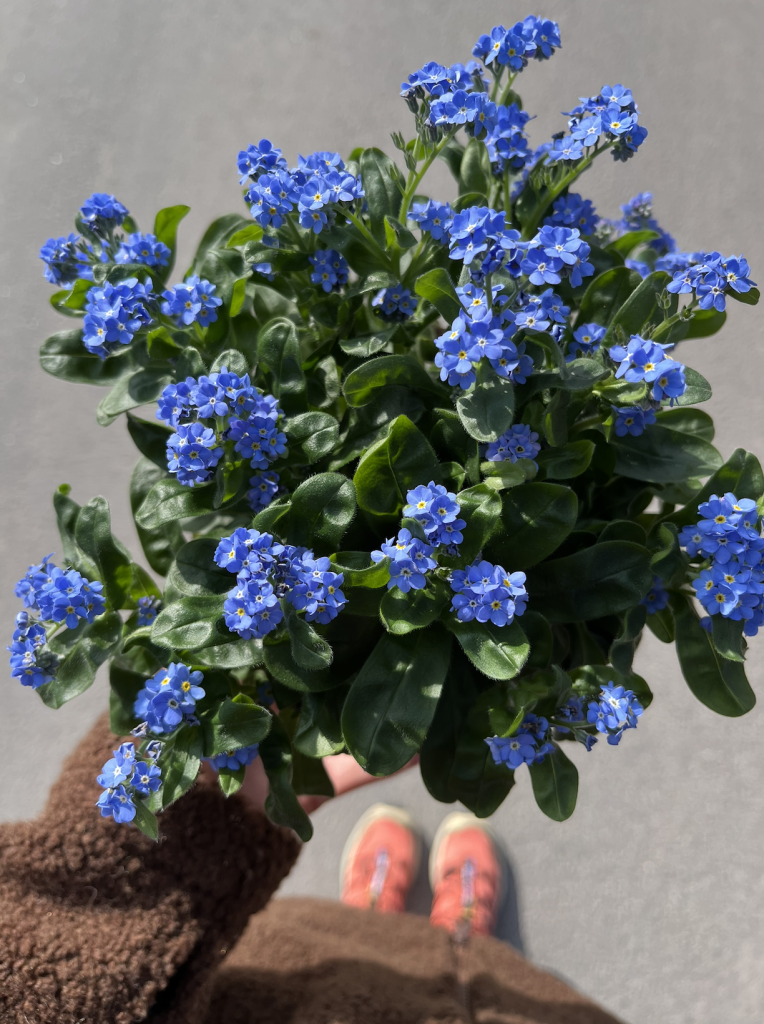
Now, what is it that makes spring in a high latitude country so special? Obviously, spring is generally admired across countries, but I think it just feels extra special up North. It is clearly not the ‘warmth’ (0-8 degrees) alone, nor the green – as blooming trees and green grass only arrive around mid-April. So, it must be the light. An ever-present topic in discussions with family, friends and colleagues in wintertime. Interestingly, during winter, I do not mind the darkness so much. In the time leading up to Christmas, it can be actually really lovely with all the sparkling lights around and cosy decorations and events. The time post-Christmas, in the early new year, is likely to receive some snow which brings new fun activities. It is usually towards the end of January or early February where you can feel your energy fading, both because the first months of the year are typically very busy at work (hint to my previous article on grant application season…) and because you are just already several months into the dark winter, and the few hours of daylight tend to be covered by grey clouds, leaving even less room for light.
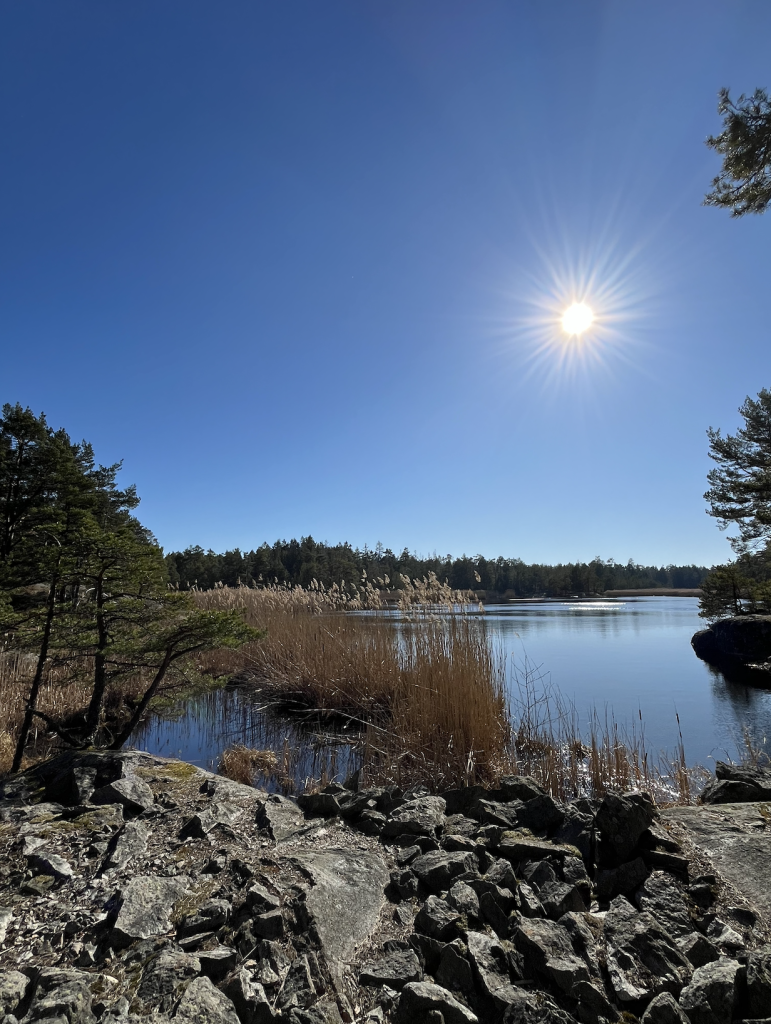

It is with the arrival of the longer days, and increased amount of sunlight and blue skies, where it suddenly feels like you get double the number of things done during the day compared to previous weeks. So, winter or the darkness, mainly feel tough in hindsight (for me). The process of photosynthesis is widely known in plants, but I am convinced that humans, or all living beings for that matter, including animals, most definitely have their own version of photosynthesis and are powered by solar energy.
However, as with everything, sun needs to be consumed in moderation. Not only to prevent skin cancer, but also to not be caught in the trap of spring fatigue. The latter is a common phenomenon that can affect people temporarily as their bodies adjust to the changing seasons and the causes are multifactorial (and not fully resolved – more research is needed!). Hormone level changes and temperature increases with consequential drops in blood pressure – as blood vessels expand (vasodilatation) –, are some of the suspected causes. Also, people tend to overdo it as soon as spring hits, the initial excitement stronger than the available energy levels. Additionally, if you are originally coming from countries closer to the equator (and I include central and southern Europe in this), and receive pictures from family and friends of lush meadows and abundant blooms, or the first barbecue in the sun as early as March, while Sweden is still a reflection of fifty shades of brown – it can feel tough and still very much like winter has not ended.
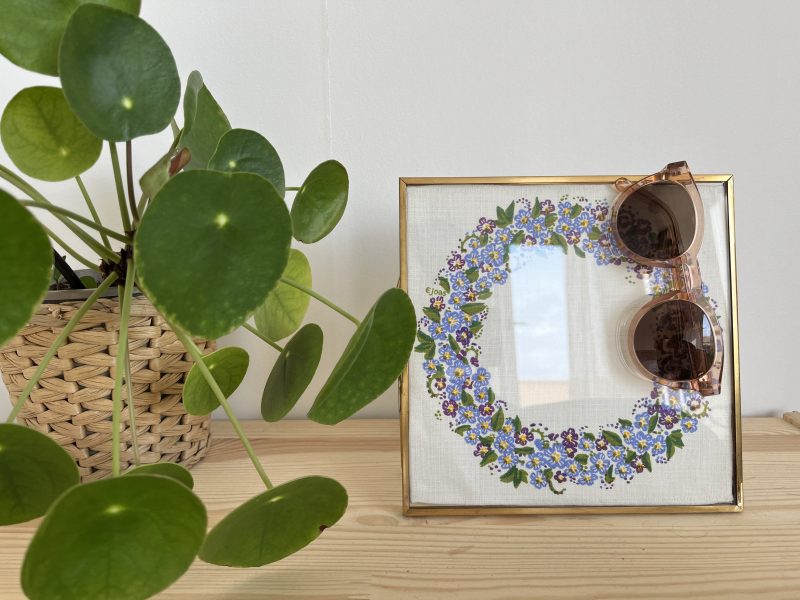
This ambiguity of Swedish spring leads me to the sunglass paradox (kudos to you if you have read this far whilst in fact you just wanted to know what this is) – it is a term that I coined last week, in the constant struggle to decide whether to wear sunglasses or not. On one hand I refuse to wear sunglasses to get as much light as possible into my eyes, and on the other, the eyes are clearly not used to so much sun and in desperate need for tainted glasses to slowly adapt to the sudden increase in brightness.
In conclusion, I think I must acknowledge that it is not spring that I love, but in fact it is seasons. Since winter can be fantastic, summer is undoubtedly great and autumn (the season that I actually deem as my favourite) is just beautiful with all the colours and cosiness. Without seasons, one would not know how to appreciate what one currently has, and everything would just be felt far less intensely. Just as hardships make you treasure joy.

0 comments