

Research is like a long-term investment in stock market
Written by Sadaf Fazeli, PhD student at Karolinska Institutet and participant of the course “Career Skills for Scientists” during the autumn term 2025.
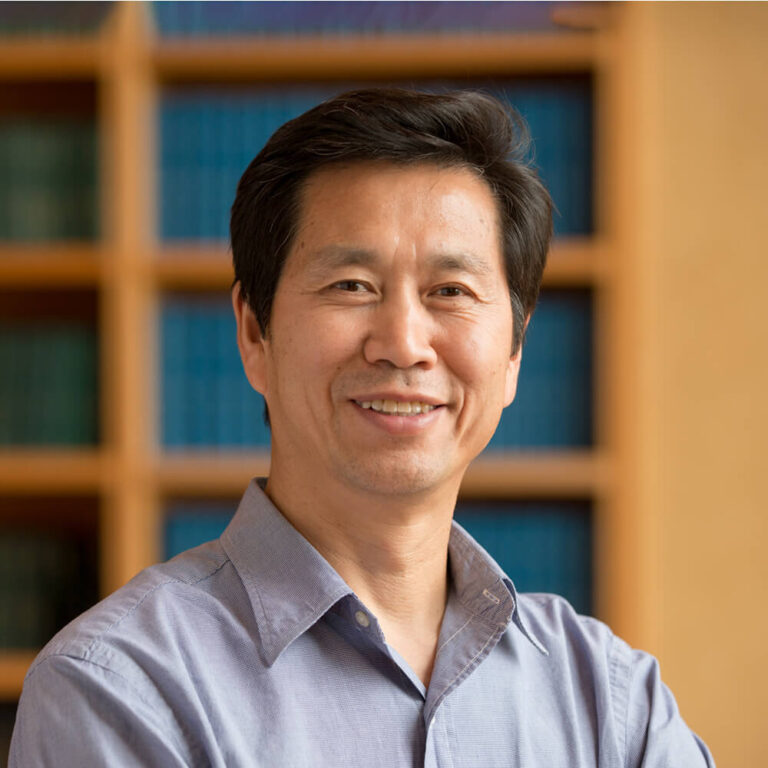
Professor Linheng Li is internationally recognized for his pioneering research in adult stem cell biology and cancer niche dynamics. Beyond his scientific achievements, he is deeply committed to mentoring the next generation of researchers. Many of his former trainees now lead independent research programs around the world. He completed his PhD at New York University and is now an Investigator at the Stowers Institute for Medical Research and Professor at The Graduate School of the Stowers Institute in Kansas City, Missouri, USA.
I met Professor Linheng Li during a seminar at Karolinska Institute and was immediately struck by his openness and curiosity. He genuinely wanted to know about everyone’s research and listened carefully before offering thoughtful suggestions. That warm and interactive attitude made me feel he would be the perfect person for my career portrait. This time our discussion felt less like a formal interview, and I found myself sharing more about my own background, and he responded with reflections that made me rethink some of my assumptions about my career path. Let me share my encounter with Professor Li with you.
We start by talking about research and his background, and whether he had always known he wanted to lead his own group.
“Never! PhD is when you learn how to do research; postdoc is when you sit down and think, what do I enjoy most, what am I good at, and what do I really want to do?”
He compares research trends to the stock market.
“You need to see where the trend is going. Maybe what you’re doing now won’t be the trend in a few years. You can’t keep investing in something that’s going down,” he says with a smile.
I find this analogy both realistic and refreshing. Professor Li clearly has an academic mindset combined with a business-like perspective, something I admire deeply. He doesn’t see non-academic careers as “the dark side,” a thought still common among some academics. His way of thinking makes me reconsider my own decision to completely rule out an academic path. Perhaps I have closed that door too quickly.
Regarding transferable skills, he emphasizes that the definition of “valuable skills” keeps changing.
“It is beneficial for a biologist to learn bioinformatics, but it has been a tricky skill. Now, with AI tools, that’s easier. What matters more is developing your creativity as a researcher. Be well-rounded, don’t be narrow-minded.”
That advice reminds me that adaptability and creative problem-solving will always stay relevant, no matter how technology evolves.
When recruiting a new PhD graduate there is one quality he values most – simple but powerful.
“Passion. That’s the most important. When someone has passion, everything else follows. Of course, adaptability and teamwork matter, but without passion, none of the other qualities mean much.”
Identifying that passion is easy. He smiles again: “It’s obvious after a conversation.”
Finally, his advice for those wanting to stay in academia is clear and strategic.
“Your postdoc is when you define your research field. Choose wisely, because once you start applying for grants, your track record will lock you into that area. Changing fields later becomes very difficult.”
Talking to Professor Li left a strong impression on me. His balanced perspective, combining scientific curiosity, adaptability, and strategic awareness, made me reflect more deeply on my own path. I walked away inspired not only by his words, but also by his calm confidence and genuine curiosity toward others. It reminded me that science is not just about results or prestige, but it’s about staying curious, being adaptable, and keeping the passion alive.

0 comments