
Insights from Master’s Thesis Project Supervision
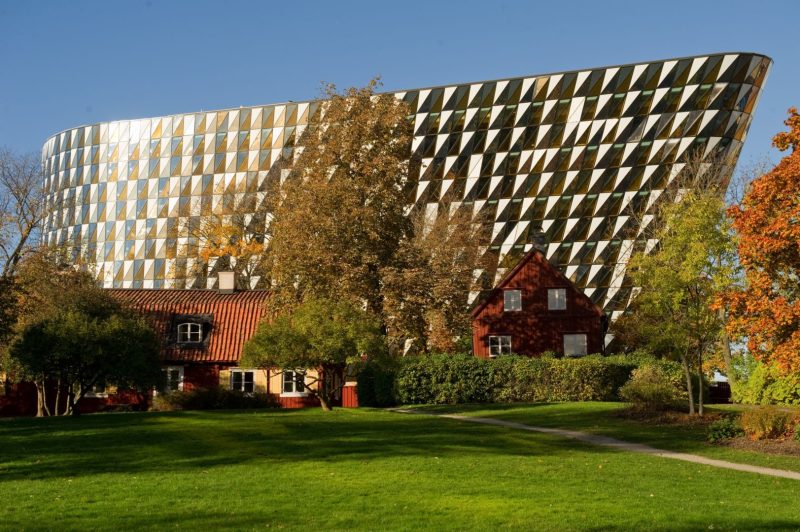
As we have moved beyond the autumn equinox, the ivy on KI Solna’s brick buildings is turning red, the morning bike commutes become fresh, and a buzzing ‘back-to-school’ atmosphere prevails on campus. My absolute favorite season. And just as the Swedes embark on their mushroom hunts at this time of the year, the second-year Master students, the semester barely kicked off, embark on their hunt for Master thesis projects.
Last year before the summer, a Master student from KIs Public Health Programme reached out to me on LinkedIn to enquire about Master thesis opportunities with me on One Health, a topic very dear to my heart. Also, I am very interested in all forms of teaching in higher education, so naturally, I was flattered and keen on making this work. I had never officially supervised a student before, so a small part of me was also scared about taking on this big responsibility.
First and foremost, I was impressed, that the student had reached out in June, before or actually just at the start of summer (surely first-year Master students have different things to think about at that time of the year?), since the students are generally only due to decide on their Master thesis project in the following November/December. Green flag, I thought to myself. We arranged a brief call and discussed interests, expectations and opportunities. She said she would think about it and additionally keep her eyes open for other options, which I also encouraged her to do. Eventually, after the summer, she decided she would want to do the thesis with me in our research group – lucky me.
What followed were some weeks (or months?) of back and forth in terms of finding a suitable thesis topic, that 1) fits under the umbrella of my postdoc project that I was working on, 2) suits both of our interests, and 3) (and probably most importantly) conforms with the thesis requirements of the programme – allowed formats were quantitative and qualitative studies, and systematic reviews. The idea of this project allocation task was easier in my head than it turned out to be in reality – surprise. After agreeing with my own supervisor, we decided that we would go for a systematic literature review that combined urban environmental epidemiology and One Health. Our group had at that time not really ventured into One Health research just yet and hence, on the one hand, we lacked the appropriate data for doing quantitative research, and on the other, we were also not fully ready to commit to qualitative research, something we do not do much in our group, being epidemiologists at the core. We concluded that it made most sense to venture into a new research area with a systematic review, to get a good grasp of the topic and available literature. Great idea on paper… doing a systematic review in 4 months, whilst I myself had never done a proper systematic review on my own yet, apart from training purposes during my own Master studies. Ambitious.
The finding of the perfect research question was more of an iterative process than I would have liked it to be, and we had to change focus once or twice. In January, we kind of started afresh, and found a research aim that fulfilled all the criteria as mentioned above – finally. Green light was given by the thesis module coordinators. I will not hide that I have had some sleepless nights right after the Christmas break, breaking my head on a suitable research question that ticks all the boxes, and most importantly, is also feasible, and interesting for all the parties involved. The student was also from the Health Promotion and Prevention track of the public health Master, which came with an additional requirement, 4) the thesis or research aim needed to include some kind of intervention. And turns out, perhaps unsurprisingly, that the scientific literature lacks in intervention evaluation studies.
Anyway, long story short, we found an interesting topic that, in my opinion, also allowed for valuable contribution to science and practice, a criterion that personally I feel should actually be one of the essential criteria of a thesis project. We settled for a thesis on new urban models (e.g., the 15-Minute-City, Low Traffic Neighbourhoods) and their impact on transportation behaviour and human, animal and environmental health (= One Health). Hence, the beginning of this supervision period was bumpy, but we got the ball rolling with the official start of the thesis module at the end of January. And from there, things started to become smoother (mostly for me). The following months, my student was exceptionally hard-working. We had weekly meetings, and I had no doubt that she had everything under control – and my task was really just – supervising.
Why am I sharing this? Often Master students have difficulty in securing thesis projects, and researchers have generally too much on their plate – leading to a mismatch of thesis project supply and demand. However, in my opinion, Master student supervision can be a very enriching experience, for both the student and the teacher. I have had the privilege of learning with my student, every step on the way, both scientifically (‘how to conduct a systematic review’), but also in terms of leadership, responsibility and accountability (‘how to be a supervisor’), besides delving into a new research area. It was an incredible experience that contributed to both of our personal and professional growths. Also, interpersonally, we just got along really well, sharing similar interests and passions, as well as workflows, tending to frequent lengthy emails and sending each other interesting events and articles on LinkedIn – not bad traits I would say! I am aware that we were a lucky match, and that this may not always be the case. So, a Master thesis supervision can look also very different, depending on a myriad of factors, where you as supervisor may end up doing most of the work and/or with interpersonal issues stand in the way. I would say, it is essential that you ‘get a good vibe’ when meeting potential students for the first time – but even then you will never know how it will all work out. Lastly, I would still like to highlight also the support you can get from your colleagues, in terms of both expertise and social support, during the whole thesis supervision process.
At the end of the thesis period, the goodbye was almost bittersweet. She graduated with distinction, and no one would have deserved it more (in my opinion). I was sad that this, kind of collaborative, project had come to an end.
To summarise, the task as a supervisor took more time from me than I had anticipated (surprise), especially, and perhaps surprisingly, before the actual thesis start and, naturally, towards the end. Yet, without doubt, I would and will do this again and recommend any early-career researcher to take on this commitment, it will likely be worthwhile time investment. And, if you are lucky, you may gain a publication and/or, perhaps even more interestingly, a future scientific collaboration partner.

0 comments