

On Karolinska institutets websites, we use cookies in order for the websites to work well for you. Cookies on the website

Close
Jump to main content
Karolinska Institutet Karolinska Institutet

Researcher blogs

  • Home Dropdown-icon
    • About KI Career Service
  • About this blog Dropdown-icon
    • About this blog
  • Bloggers Dropdown-icon
    • Meet the bloggers
  • Career posts Dropdown-icon
    • Academic career tools & tips
    • Career portraits of KI alumni
    • Internships beyond academia
  • Science posts Dropdown-icon
    • PhD thesis
    • Popular science
  • Culture posts Dropdown-icon
    • Cultural & Social Activities
    • Life in Sweden
    • Research and work culture
Show search field

Show menu

  • 16th December: Beginning of “Simbang gabi” in the Philippines

16th December: Beginning of “Simbang gabi” in the Philippines

16 December, 2021

What is “Simbang gabi”, you ask?

Although the direct translation is “night mass”, it has been part of the Filipino Catholic tradition to start a 9-day chain of early morning masses in anticipation for Christmas. It begins on December 16 and goes on until 24th. The mass starts at around 4:30 in the morning. Some parishes even give two masses, where one starts at 3 am and another at 5 am. If early morning masses are too much, there is also an option of evening masses at 8 pm starting from December 15th until the 23rd.

Completing the nine early morning masses is not an easy feat. Every year, I tried to finish this whenever I was back home. I would be quite good at waking up until the 3rd day but then dwindle around Days 4-6 then again regain energy towards the last days. I remember completing all 9 days only three times in my life considering the decades of trying.

One of the things I look forward to aside from the mass is the food we eat after. Outside the church, there would be vendors of bibingka (rice cakes with coconut shavings on top with an option of having salted egg on it) and puto bumbong (purple rice steamed in bamboo tubes, garnished with coconut shavings and sugar). Because the demand is quite high, we were quite strategic about this and already put in our orders before the mass so that we can just get it after and avoid the long queues.
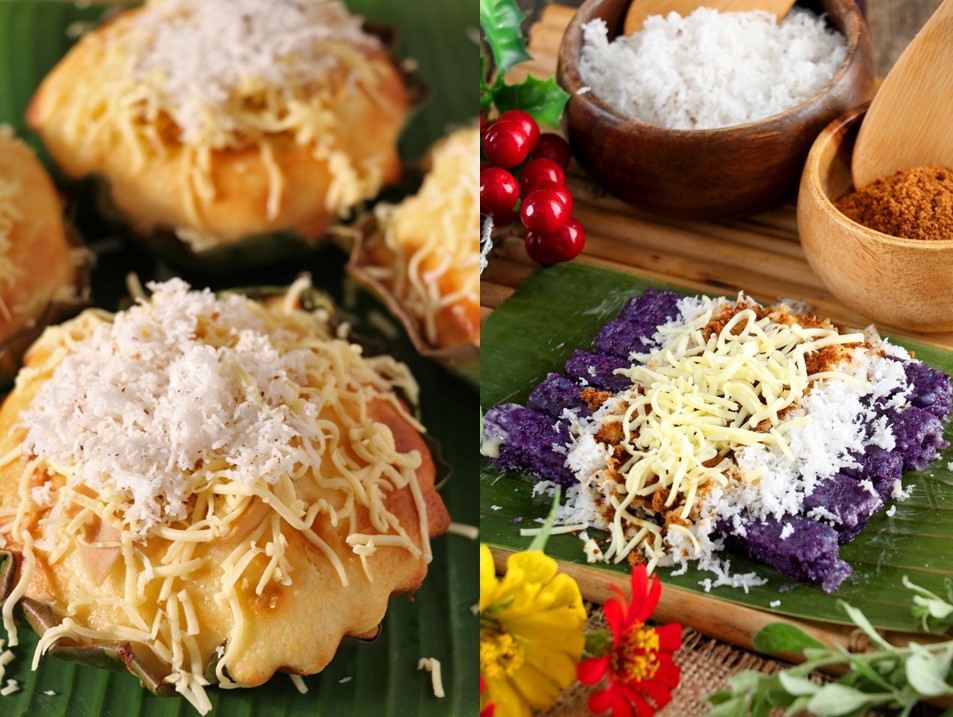
Photos of bibingka (left) and puto bumbong (right) from Bebs of foxyfolksy.com

The church we go to is inside a military base. One of the perks of attending mass there is that they would have the military band play Christmas songs outside of the church after the mass. Some may just walk past them but my family would actually stop and watch them, enjoying the early morning cool breeze and smell of delicious food in the air.

So, whenever it is December 16, I am reminded of these fond memories with loved ones, attempting to complete early morning masses, enjoying the food and Christmas music. How about you? What Christmas traditions do you have back home that puts a smile on your face?

Richelle Duque Björvang

Richelle Duque Björvang

0 comments

Like 0 likes this post

Leave a Comment Cancel reply

  • Previous post 15 mindfulness tips to help you wrap up 2021 and start 2022 with a clearer mind
  • Next post Children are the centre of Christmas: Can we not make them the centre of the SDG agenda, too?

Related posts

The Science of Biosafety and not forgetting

natalievonderlehr

Antonio “Tony” Rothfuchs describes his work simply: “I work on airborne transmission of tuberculosis.” But behind that modest introduction lies an academic career built step-by-step at Karolinska Institutet (KI), with formative years abroad, and a central role in shaping how KI conducts high-biosafety research today.

14 December, 2025

Stopping viruses before they spread – From the Lab Bench to Public Health

natalievonderlehr

For Eeva Broberg, a career in virology at an international public health organization was far from straightforward. An influenza pandemic opened unexpected doors, becoming the catalyst for a long and fulfilling profession.

14 December, 2025

Causal Inference and Academic Freedom

natalievonderlehr

Recently Viktor Ahlqvist studies received significant international attention. His work demonstrated that the use of paracetamol during pregnancy is unlikely to cause autism in children. The findings gained particular visibility after the claim of Donald Trump that paracetamol use in pregnancy is driving rising autism rates.

7 December, 2025

Categories

  • Career
    • Academic career tools & tips
    • Career portraits of KI alumni
    • Internships beyond academia
  • Christmas Calendar
  • Culture
    • Cultural & Social Activities
    • Life in Sweden
    • Research and work culture
  • Doctoral course Career Skills for Scientists
  • Doctoral Students’ Association (DSA)
  • Meet the bloggers
  • Postdoctoral researcher
  • Science
    • PhD thesis
    • Popular science
  • Sustainable Development Goals (SDGs)
  • Undefined

Latest posts

  • The Science of Biosafety and not forgetting
  • Stopping viruses before they spread – From the Lab Bench to Public Health
  • Causal Inference and Academic Freedom
  • A perfect role for nerds who are extroverts
  • “Try to understand what you want from your life” – The Career Path of Ulrika Björkstén

Recent Commented Posts

  • Meet the Blogger – Hager Saleh
    Ehab Elagab
  • The joy of giving
    Be nice - to yours...
  • Dear Santa,
    The old and the ne...
  • Stockholm calling
    Meet the Blogger ...
  • Decentralized Science – should Science be crypto-fied?
    Ryan Saenz
  • Follow us on Instagram
Karolinska Institutet

Tillgänglighetsredogörelse

Either your browser does not support javascript, or javascript is disabled. This site works best if you enable javascript.