

Causal Inference and Academic Freedom
Career Portrait of Dr. Viktor H. Ahlqvist
Written by Jing Zhou, PhD student at Karolinska Institutet and participant of the course “Career Skills for Scientists” during the autumn term 2025.
Dr. Viktor H. Ahlqvist is a Postdoctoral Fellow at Aarhus University and Karolinska Institutet, specializing in Pharmacological Epidemiology, Statistical Methods, and Causal Inference. He completed his PhD at KI and balances his academic research with a consultant role for Region Stockholm.
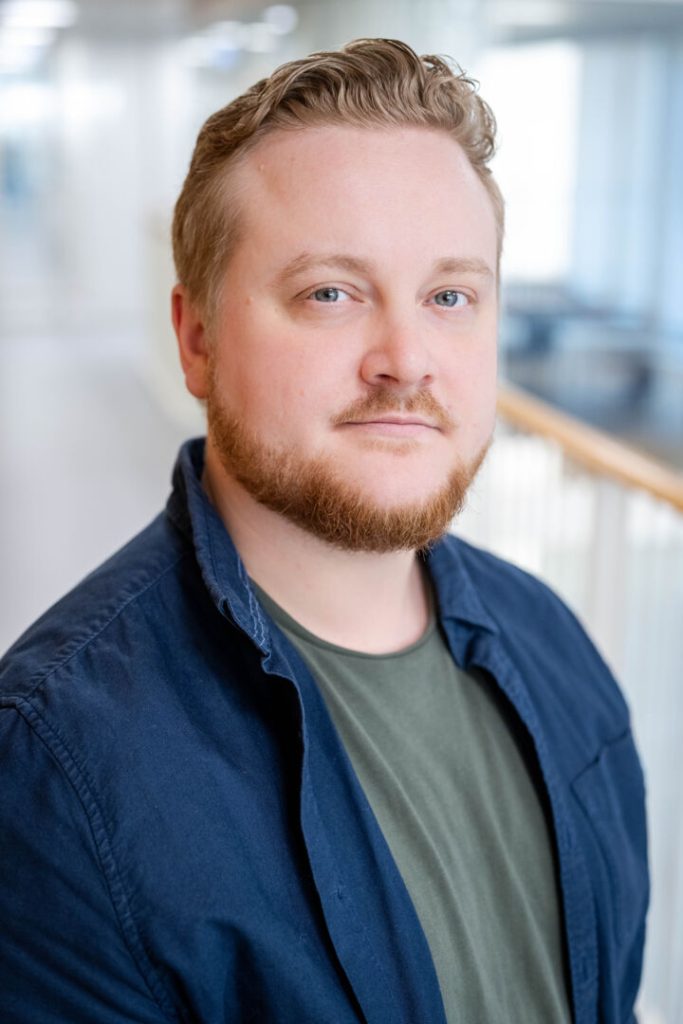
One of his recent studies, published in JAMA, received significant international attention. His work demonstrated that the use of paracetamol during pregnancy is unlikely to cause autism in children after adjusting for key confounders. The findings gained particular visibility after United States President Donald Trump publicly claimed that paracetamol use in pregnancy is driving rising autism rates and suggested pregnant women should “tough it out”. His experience illustrates not only the importance of robust real-world evidence, but also the responsibility researchers carry when communicating science to the public – especially in an era where misinformation can spread rapidly.
Q: Your research on paracetamol medication in pregnancy recently led to massive media attention, against Trump’s healthcare claim. How do you feel about the challenges of disseminating knowledge on a global scale?
A: It’s a huge privilege to be able to disseminate knowledge and be given a microphone on a global scale. The challenge is working within the media’s very fast time slots. You have to be prepared to answer with accuracy and provide evidence without giving value judgments. I believe it’s important for us to provide evidence and communicate our research on the uncertainties we face, especially in this time of conspiracy theories.
Q: What does your routine day as a Postdoc entail, and how does it differ from your work as a PhD student?
A: As a PhD student, I mostly focused on my own project. Now, as a Postdoc, I have a much bigger involvement in overarching projects, some of which I own responsibility for. My day is approximately 20% my own research and 80% supporting my students and collaborators. I feel privileged that I mostly have to do a little bit of mentoring and opening doors, not ‘babysitting’.
Q: Your research has been cited in clinical guidelines. How do you ensure your work has a clinical impact?
A: I’m not hoping that a clinician reads my paper and changes what they are doing. I hope that the experts who write the clinical guidelines will read my paper and say: “This is the best evidence”, and that the then clinicians listen to the guidelines. It’s about providing the best possible evidence for a public health or clinical problem.
Q: How did you decide to continue in academia rather than pursuing a full-time industry position?
A: What’s unique about academia is the ability to have intellectual creativity at all stages. I love being able to dream, pursue whatever idea you want, and have intellectual freedom. In industry, my experience is there’s always a contained product you are developing, and you need to deliver it. It is more directed, and for me, that’s not the same freedom.
Q: What do you hope to reach in the next five to ten years?
A: I would love to establish a group where we are able to attract the smartest junior people in the world to come and train with us and mentor the new generation of epidemiologists. This means bringing in advancements from other fields like biology, genetics, and computational sciences to take epidemiology into the next era. My favorite field for impact is pregnancy research, where we have immediate impact on a majority of the population.

0 comments