

From Bench Science to Building Bridges
A Conversation with Prof. Volker M. Lauschke
A candid Q&A with a scientist-entrepreneur on running labs, building companies, and making translational research actually translate.
Written by Ali Okhovat, PhD student at Karolinska Institutet and participant of the course “Career Skills for Scientists” during the autumn term 2025.
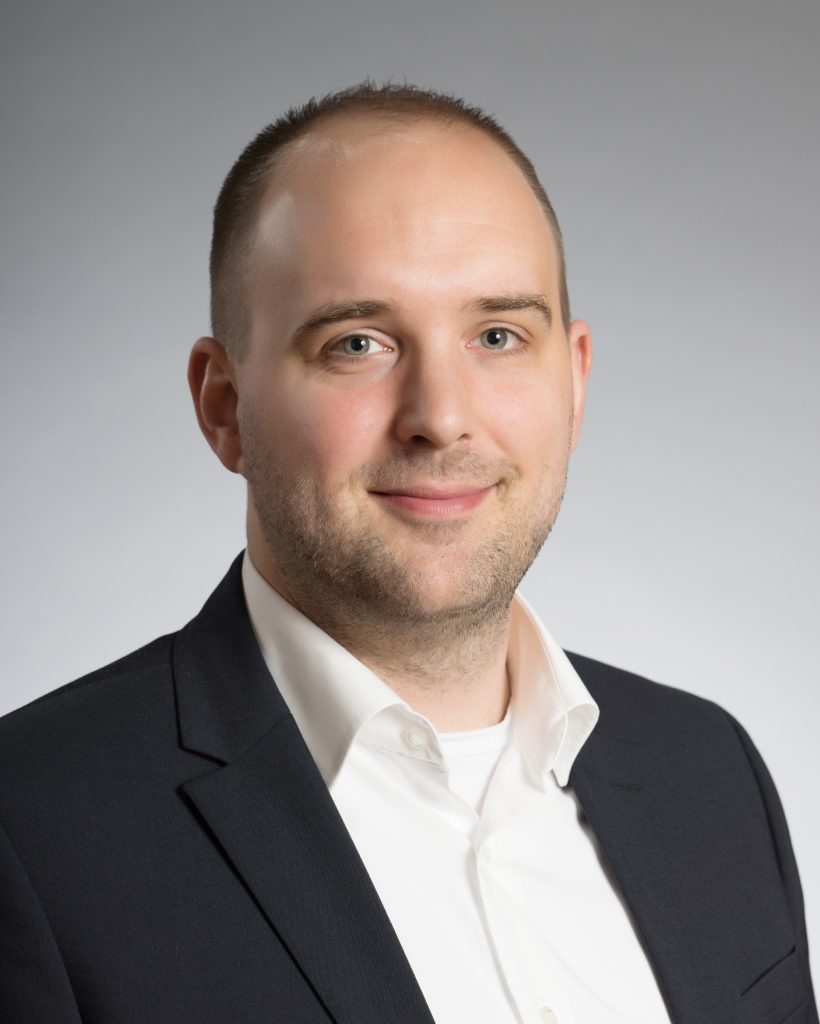
Volker M. Lauschke moves between academia and industry with unusual ease. From 3D human tissue models to startup ventures, his career threads discovery and application without pretending the workload is light. In this conversation, he talks frankly about trade-offs, structure, and why ambition – not field – drives competition.
This informational interview distills practical lessons for PhD students and postdocs eyeing careers that span research and business: how to prioritize, when to take risk, and how to design a portfolio that can produce both steady progress and big swings.
To start us off: how are you doing today – and could you share the short version of your journey into this hybrid academia – industry role?
I started in Germany studying molecular biosciences in Heidelberg, did my bachelor’s in Germany and Norway, then returned to Heidelberg for my master’s. For my PhD I moved to EMBL, working on tissue models – both in vitro and in silico. I loved the basic science but wanted more translational impact for my postdoc, so I joined Magnus Ingelman-Sundberg’s lab at Karolinska as a Marie Curie fellow in 2014 to model human liver function with 3D tissue systems. After about two years I secured funding and started my own group in January 2017. Around the same time, we launched HepaPredict, which now serves international clients in pharma. I later initiated KI’s Biofab core facility, became a full professor, and since 2021 I’ve also served as Deputy Director at the Bosch Institute of Clinical Pharmacology in Germany. More recently, we helped start a company in Shanghai to bring 3D tissue models to the Chinese market.
Many people “pick a lane,” but you’ve kept both. What were the hardest parts of growing a lab and companies at the same time?
The day has only 24 hours – that’s the main issue, especially when you’re setting up a company abroad with lots of travel and some night shifts. Sweden makes it straightforward to declare secondary occupations, and I’ve never had conflicts with my academic work. The synergy helps: the companies are closely related to our research. I also studied business in parallel, which helped with contracts, tax, and other practicalities you have to handle yourself in the beginning. Not everyone needs an MBA, but someone on the founding team should understand those basics.
Did Swedish language and local support structures matter when you were starting out?
You need some Swedish for certain administrative things, but you can also get advice. Early support for us was practical rather than financial—being connected to the right people for a website, lab space, and so on. Financially, we chose to remain fully privately owned. That was a strategic decision to avoid spending our time on investor management. Growing organically turned out to be very feasible.
Which earlier skills ended up being most useful for entrepreneurship?
Beyond the science, a working knowledge of contracts, accounting, and tax is invaluable. It’s not about the degree – it’s about knowing how to execute the “boring” administrative work well enough to get started. The rest is context-dependent. Most importantly, be clear about what you want to achieve.
Day to day, how different is academic life from industry life for you?
Honestly, they’re very similar. I’m often working from the same desk on closely related tasks. If anything, academia now has more administrative burden than industry, which used to be the other way around.
What does a typical week look like?
It’s more than 40 hours. I usually start around 5:00 with email, get to the lab by 8:00, and work until about 17:30. Evenings are for family, and I typically work one day on the weekend as well.
What advice would you give PhD students or postdocs who want to follow a path like yours?
There’s no one-size-fits-all plan – people need to look honestly at their own situation. If you want to do two things, you’ll have to work harder than doing one. Be efficient about prioritization: minimize activities that don’t move the needle and structure your milestones so you march toward your goals step by step.
Many trainees say they’re leaning toward industry because academia feels too competitive and precarious. How do you see it?
Competition follows ambition. If you aim for top roles—whether in academia or industry—you’ll face competition. Funding is more plannable than many think. If research outputs are strong and one applies broadly, there will be success. Outputs aren’t only papers; they can be guideline changes or translational advances. If the outputs are good, the funding usually follows.
Translational impact is a theme in your work. How can labs increase the chances that research reaches the clinic?
At the PI level, hedge your portfolio. Keep some safer, lower-risk projects and some high-risk, high-impact ones that could lead to a major paper or a clinical advance. I would not recommend to bet everything on moonshots, but if you never take risks, you won’t generate major impact either.
About the interviewee
Volker Martin Lauschke, PhD, MBA, is Professor of Translational Pharmacology at Karolinska Institutet and Deputy Head of the Dr. Margarete Fischer-Bosch Institute of Clinical Pharmacology in Stuttgart. He directs KI’s Biofab core facility and co-founded HepaPredict AB and Shanghai HEPO Biotechnology to translate 3D human tissue models into drug discovery. Trained at Heidelberg and EMBL, with parallel business studies at the University of Hagen, he became a KI group leader in 2017 and was later promoted to full professor. His work has earned multiple distinctions, and he is recognized for contributions to microphysiological systems and pharmacogenomics.

0 comments