

From Medicine to Strategy
The Evolution of Dr. Baoyi Zhou
Written by Jing Zhou, PhD student at Karolinska Institutet and participant of the course “Career Skills for Scientists” during the autumn term 2025.
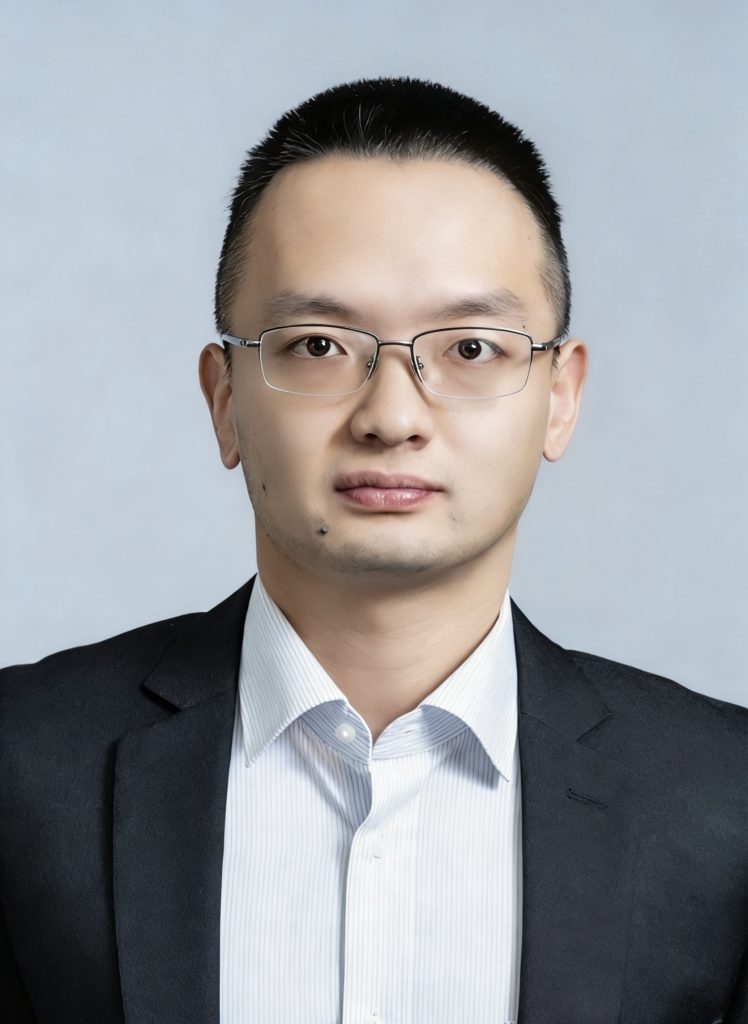
Dr. Baoyi Zhou is a Competitive Intelligence Manager at Pfizer China, with a career spanning medicine, academia, and strategy consulting. Before joining Pfizer, he worked as a Senior Life Science Specialist at L.E.K. Consulting. Baoyi holds a PhD from Karolinska Institutet, with a research exchange at Harvard University, and is also a licensed physician in China.
Can you take us behind the scenes? What does a typical day look like for you now at Pfizer compared to your time in L.E.K?
The biggest change is the shift from execution to strategy. At Pfizer, my work operates on a global rhythm. My morning commute doubles as “triage time” for emails, and the day is largely spent on cross-functional alignment, managing material resources, and monitoring the market – specifically tracking biotech Business Development (BD) deals and M&A activity to see where the industry is moving.
Because Pfizer is a multinational company, evenings often involve international meetings. I’m on calls with our New York Headquarters three to four nights a week, alongside regular cross-functional discussions. Unlike sales-driven roles, our work isn’t measured by short-term key performance indicators (KPIs). We focus on long-term strategic value.
Life at L.E.K. Consulting was quite different. Consulting is project-based, and our time and effort are the most precious resources. The environment is intensely result- and talent-driven. A typical day would start around 9:30 a.m. with case team meetings involving partners and project managers, followed by internal discussions to set priorities and align on client deliverables. After lunch, most of the afternoon was spent on desk research, data analysis, and expert interviews as part of primary research. Team dinners were common, and evenings – often from 7 to 10 p.m. – were reserved for client meetings across time zones and building presentation decks.
The pace was intense, and days rarely ended before 10 p.m. Most projects focused on life science tools, such as supporting companies like Thermo Fisher, but the environment was an exceptional training ground. Consulting taught me how to learn quickly, think in a structured way, and deliver high-quality output under pressure. Looking back, it was an ideal first stage of my career.
Looking back, which specific skills from your PhD turned out to be most valuable in Competitive Intelligence?
Interesting, not the “hard skills.” I rarely use animal experiments or statistical modeling directly. What truly matters are the soft skills developed during the PhD.
First is medical intuition. Spending nearly a decade building a medical framework allows me to grasp clinical implications almost instantly. Second is learning agility. In consulting and strategy, how you learn is more important than what you already know. My PhD trained me to research, absorb, and master new topics quickly. Third is communication – especially active listening. It’s not about responding quickly, but about truly understanding different perspectives and then formulating a strategic response.
In today’s job market, where talent supply often exceeds demand, a PhD has also become a powerful signal. It demonstrates structured thinking, resilience, and proven problem-solving ability.
You had the credentials to stay in academia. What motivated you to leave?
I looked at the data. Even at a top institute like KI, only a small fraction, about 5%, of PhDs successfully climb the ladder to Associate Professor. The funnel is extremely narrow, and the financial return often doesn’t match the effort.
I also assessed my “unfair advantages.” A hybrid MD-PhD profile is relatively common in academia, but in industry it’s rare and valuable. In academia, I was one of many; in industry, I could differentiate myself and take on leadership roles. Ultimately, it was a rational decision balancing income, personal interests, and personality. I wanted a career where my combined background would allow me to go further, not just work harder.
What was the single most important decision during your PhD?
You might expect me to say “doing an internship”, but that was just the action. The real turning point was a mindset shift.
I had to break free from rigid narratives like “I studied medicine, so I must be a doctor,” or “I did a PhD, so I must stay in academia.” Once I started preparing for the CFA and exploring alternative career paths, I realized I had options. The moment I began making decisions for myself, rather than for others’ expectations, everything changed.
If you could design a mandatory experience for current PhD students to prepare them for this transition, what would it be?
I wouldn’t mandate a course; I would mandate radical self-clarity. Every PhD student should clearly define three things:
- What do I want?
- What is realistically feasible?
- What is an ambitious but achievable with sustained effort?
Time waits for no one. The most dangerous thing during a PhD is getting lost in noise and comparison. You may not be able to choose your environment, but you can choose how you filter information. Ignore unhelpful voices, block out unnecessary anxiety, and execute your own plan decisively.

0 comments